
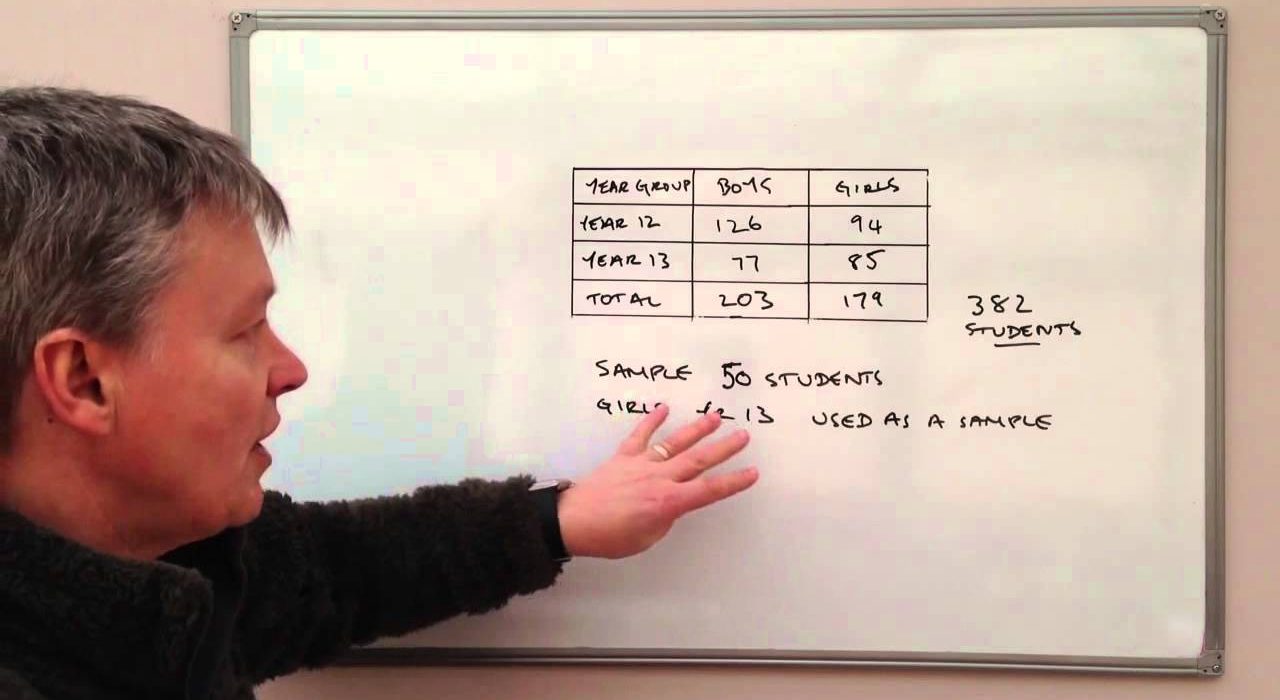
Stratified random sampling is a method where you divide a population into distinct subgroups (strata), then randomly sample from each subgroup. While there isn’t one single “formula,” the most common approach is proportionate allocation:
. This ensures every important segment of the population is represented—unlike simple random sampling, which can miss smaller groups by chance.
The formula for sample size from each stratum:
> nₕ = (Nₕ / N) × n
Where:
- nₕ = Number of samples to draw from stratum h
- Nₕ = Total population size of stratum h
- N = Total overall population size
- n = Desired total sample size
When to Use Stratified Random Sampling
Use this method when your population has distinct subgroups that differ meaningfully and you want to ensure all groups are represented in the sample.
| Situation | Strata Examples |
|---|---|
| Employee satisfaction survey | Department, seniority level, location |
| Customer research | Age group, purchase tier, geography |
| Academic study | Gender, income bracket, education level |
| Quality control | Production shift, machine line, factory |
| Political polling | Region, age, party affiliation |
Proportional vs Equal Stratification
| Type | How It Works | When to Use |
|---|---|---|
| Proportional | Samples from each stratum match its proportion in the population | When all strata need equal representation relative to size |
| Equal (disproportional) | Same sample size from each stratum regardless of size | When smaller strata need more representation for analysis |
Proportional is more common – it ensures the sample mirrors the real population composition.
Worked Example: Proportional Stratified Sampling

A company of 1,000 employees wants to survey 100 people. The workforce is divided:
| Department | Population (Nₕ) | Proportion | Sample (nₕ) |
|---|---|---|---|
| Sales | 400 | 40% | 40 |
| Operations | 350 | 35% | 35 |
| Finance | 150 | 15% | 15 |
| HR | 100 | 10% | 10 |
| Total | 1,000 | 100% | 100 |
Formula for Sales: nₕ = (400 / 1,000) × 100 = 40 employees
Each department is then randomly sampled within its quota.
Stratified vs Simple Random vs Cluster Sampling
| Method | How It Works | Best When |
|---|---|---|
| Simple random | Randomly select from entire population | Population is homogeneous |
| Stratified random | Divide into groups, randomly sample each | Population has meaningful subgroups |
| Cluster | Divide into clusters, randomly select whole clusters | Geographically dispersed population |
| Systematic | Select every nth person from a list | Large, ordered population lists |
Advantages and Limitations
| Advantage | Limitation |
|---|---|
| Ensures all subgroups represented | Requires prior knowledge of population structure |
| More precise estimates than simple random | More complex to implement |
| Reduces sampling error | Stratification criteria must be carefully chosen |
| Allows subgroup-specific analysis | Can be expensive if strata are very different |
The Bottom Line
The stratified random sampling formula ensures your sample accurately reflects the composition of the full population – critical for any research where subgroup differences matter. It’s more work than simple random sampling, but it produces more reliable, representative results. For surveys, academic research, and business analytics involving diverse populations, it’s usually the better choice.